
Clinton County Arrest Warrants Explained
An arrest warrant tells a peace officer to arrest a specific person and bring that person before a judge. Here is how one starts in Clinton County. An investigating agency gathers the facts and settles on a charge. Supervisors may weigh in. So may the County Attorney. The charge can then be filed by complaint with the Clerk of District Court, and a judicial officer issues the warrant under Iowa law. Not every warrant follows a new charge, though. Skip a court date on a citation and the court can issue a warrant anyway; Iowa Code section 805.5 calls it an arrest warrant for failure to appear. That order works differently from a new-charge warrant, yet both let an officer make an arrest. So ask the clerk for the exact order, case number, and reason rather than trusting a broad label like "bench warrant" or "traffic warrant."
From Clinton Investigation to Court
The Clinton County Attorney's criminal-process material lays out the local chain step by step. An officer investigates within the agency's jurisdiction. The officer decides the charge. The complaint goes to the clerk. A judge or magistrate then handles the warrant process and, once the person is arrested, the initial appearance. At that hearing the person learns the charge and its possible consequences, may ask for appointed counsel, and gets the next hearing date along with bail conditions. Clinton County publishes no standard arrest-warrant application form or fixed timeline. The judicial restriction rules do say that warrant applications, orders, and supporting information can stay sealed until execution, return, or initial appearance. That is exactly why a silent public docket in Clinton County calls for a direct call to the agency or a lawyer.
Inside a Clinton County Arrest Warrant
Clinton County posts no public arrest-warrant listing you can browse. What follows is a walkthrough of the fields a warrant typically carries. Treat it as a guide to the process, not a sample record. Nothing here promises which fields become public or when.
| Case identifier | An Iowa Case ID may use the 17-character state format; citations have separate numbers. |
|---|---|
| Warrant type | New-charge arrest warrant or failure-to-appear arrest warrant, as the record states. |
| Charge | Offense, Iowa Code section, and felony or misdemeanor class when public. |
| Issuing court | Iowa District Court and the assigned magistrate or judge. |
| Issue and service | Order date, service, return, and initial-appearance events, subject to access limits. |
| Bond or release | Terms set for the case; no universal county schedule is published. |
| Serving agency | Sheriff, local police, State Patrol, or another authorized agency. |
| Later status | Recall, quash, or other clearance action that needs official confirmation. |
Never copy personal descriptors or protected identifiers out of a case record. Juvenile and sealed files in Clinton County carry even tighter limits.
Why Clinton County Warrants Stay Confidential
Why keep a new warrant under wraps? Two reasons. Sealing lets law enforcement execute the order safely and protects the investigation. Iowa Judicial Branch access rules restrict outstanding arrest-warrant cases and warrant documents until the warrant is executed, returned, or the person reaches initial appearance. Access may widen at that point. It can also stay closed if another court order or law says so. The Clinton County Attorney FAQ applies that rule locally and tells anyone who suspects a new-charge warrant to contact the local police department.
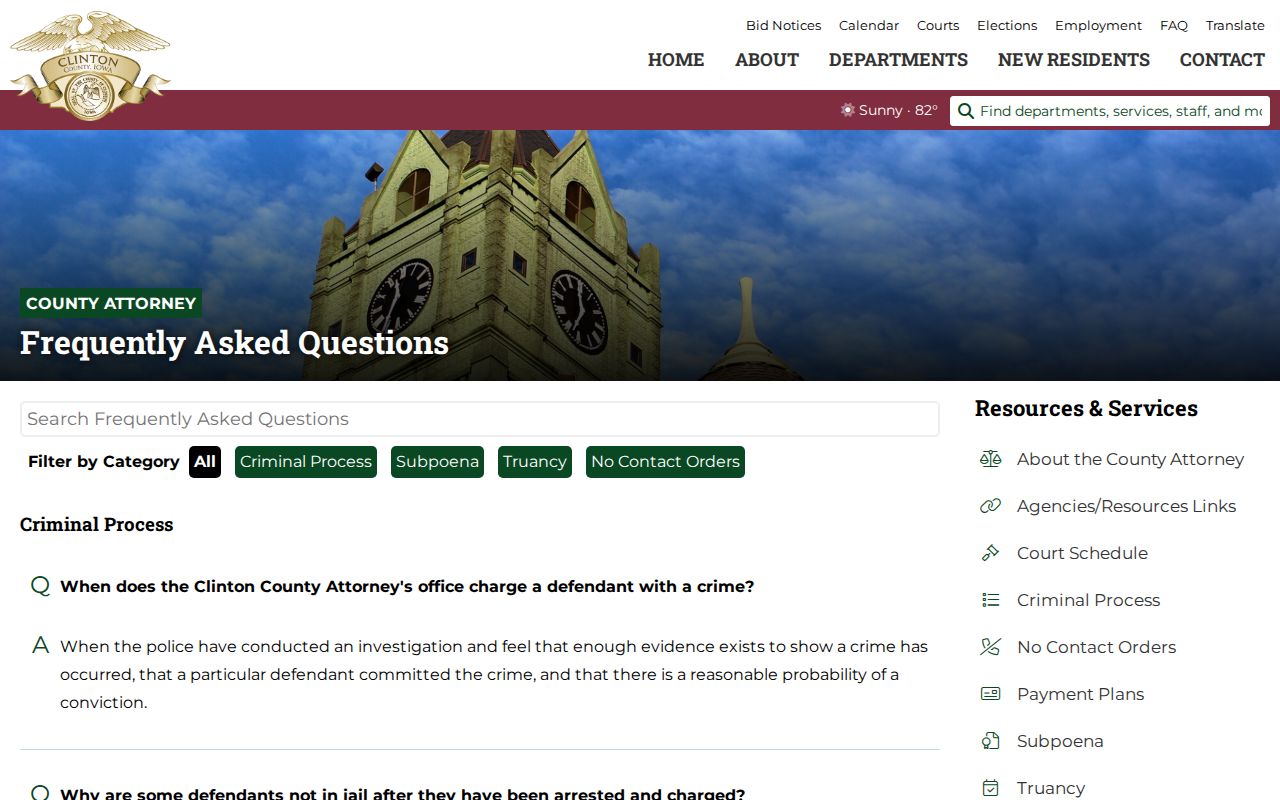
A missing online result in Clinton County is a reason to call, never a reliable all-clear.
Serving Arrest Warrants in Clinton County
Which agency serves a Clinton County warrant depends on jurisdiction. It could be the Clinton County Sheriff's Office. It could be the Clinton, DeWitt, or Camanche police. It might be the Iowa State Patrol or another authorized agency. The County Attorney may consult on the charge, the clerk keeps the filed case, and a magistrate or judge makes the court decisions and holds the initial appearance. The county departments directory lists these justice and law-enforcement offices.
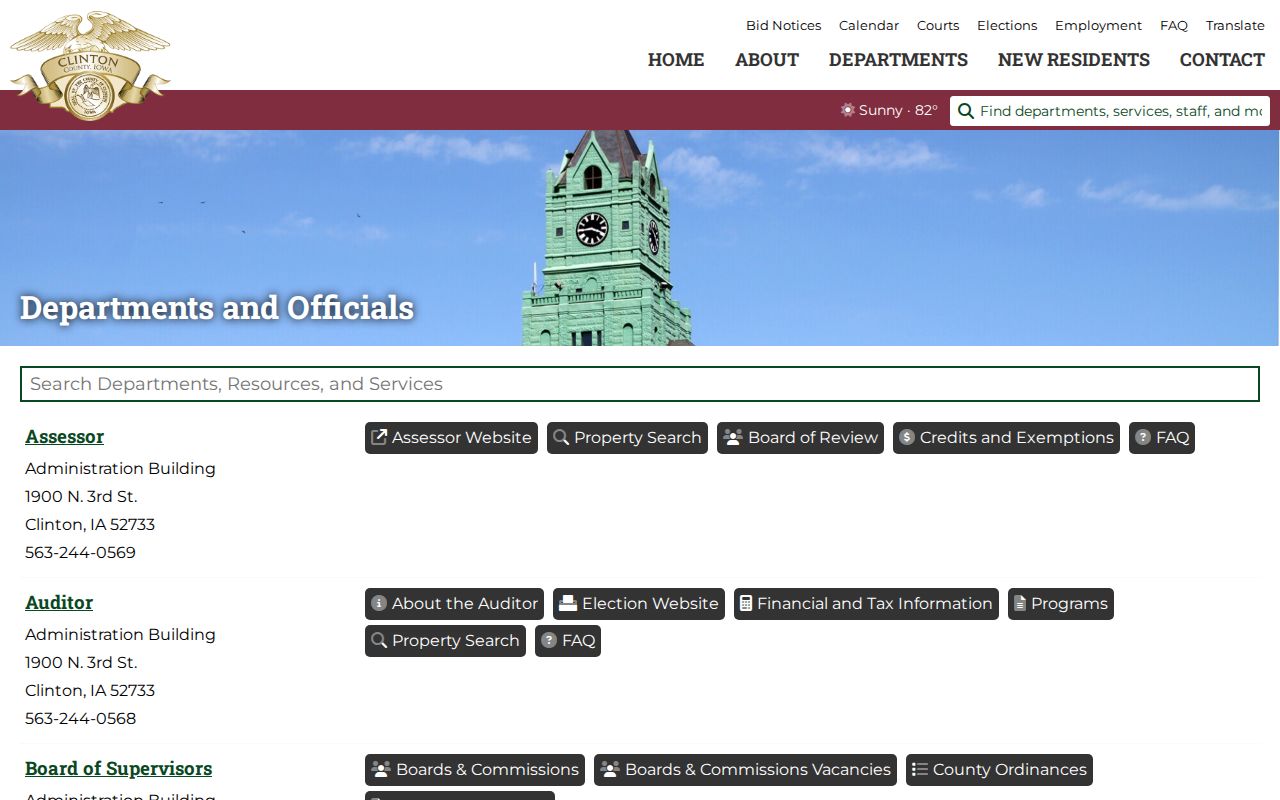
The directory helps you find an office. The serving agency still depends on the specific warrant. After service, a person may be booked at the Clinton County Jail or another authorized facility, then taken to initial appearance. Some go home after bond or pretrial release. Clinton County publishes no universal timing rule, surrender window, bond schedule, or accepted warrant-bond payment method, so ask the jail or clerk directly.
Clinton County Police May Be First
Suspect a new-charge warrant? The police department with jurisdiction may be the right first call. The County Attorney FAQ says exactly that. Phone before you show up. Ask whether the agency can confirm the proper surrender route, whether a lawyer may coordinate it, where to report, and what ID or arrangements to bring. Clinton, DeWitt, and Camanche each publish police contact pages, though none of the three offers a public city warrant search. A complaint that starts with a city officer still proceeds in Iowa District Court, since Iowa has no separate municipal criminal court. Once the case is filed, the Clerk of District Court remains the contact for court records in Clinton County.
Safety step: Arrange any voluntary appearance with the issuing agency and counsel before traveling to a police station, courthouse, or Law Center.
Comparing Arrest, Summons, and Bench Warrants
Each of these documents pulls a person into court by a different route. The exact paper controls, so verify any public case label with the clerk or an attorney in Clinton County.
| Process | Function | Key distinction |
|---|---|---|
| Arrest warrant | Commands arrest and court appearance | May arise from a new charge or FTA |
| Summons | Orders appearance without immediate arrest | Must be obeyed by its stated date |
| Bench warrant | Judge-directed arrest order in a case | Often follows nonappearance or contempt |
| Search warrant | Authorizes a specified search | Not an arrest-status record |
Iowa Code chapter 808 demands sworn facts, specificity, and a magistrate's probable-cause finding before a search warrant issues. A sealed search application is not a Clinton County person-lookup result.
Clinton County Service Changes Access
Service is the moment Clinton County officers actually execute an arrest warrant and bring someone before the court. Return is the paperwork that flows back. The initial appearance follows, where a judicial officer lays out the charges and possible consequences, takes up counsel, sets the next step, and rules on bail or release. Each of these events can shift what the public side of the Clinton County court system shows. But not every document becomes public. A sealed indictment, a protected filing, a juvenile case, or a specific court order can keep information restricted. Iowa Courts Online itself warns that users see only what is available to the public. When access changes, trust the current docket and the court order, not an old saved screen.
If There's an Arrest Warrant for You
First figure out what kind of trouble you're facing. Is it a new charge, a missed court date in an open case, or a notice from an agency? For a public Clinton County case, call the Clerk of District Court at 563-243-6213. A possible new-charge warrant means calling the local police agency. For sheriff-held process, call 563-242-9211. An attorney can coordinate these calls and handle surrender, bond, and the next hearing.
- Gather the legal name, birth date, case or citation number, and any notice received.
- Search permitted public case information, but do not rely on silence.
- Confirm the issuing court and serving agency by phone.
- Ask whether counsel may arrange a voluntary appearance and what bond or release question applies.
- Follow the exact reporting instructions and attend the initial appearance.
- Keep the docket entry, court order, receipt, or agency proof showing later status.
Posting bond in Clinton County secures an appearance. It does not dispose of the charge, and paying court debt may not recall the warrant either.
Clinton County Bond at Appearance
At the initial appearance, a magistrate states the charges and takes an application for appointed counsel. In certain sexual or domestic-abuse cases, a no-contact order may issue. The magistrate also schedules the next hearing and sets bail conditions, which can mean money, supervision, evaluation, or other terms. The official jail information page posts the Law Center contact route for Clinton County.
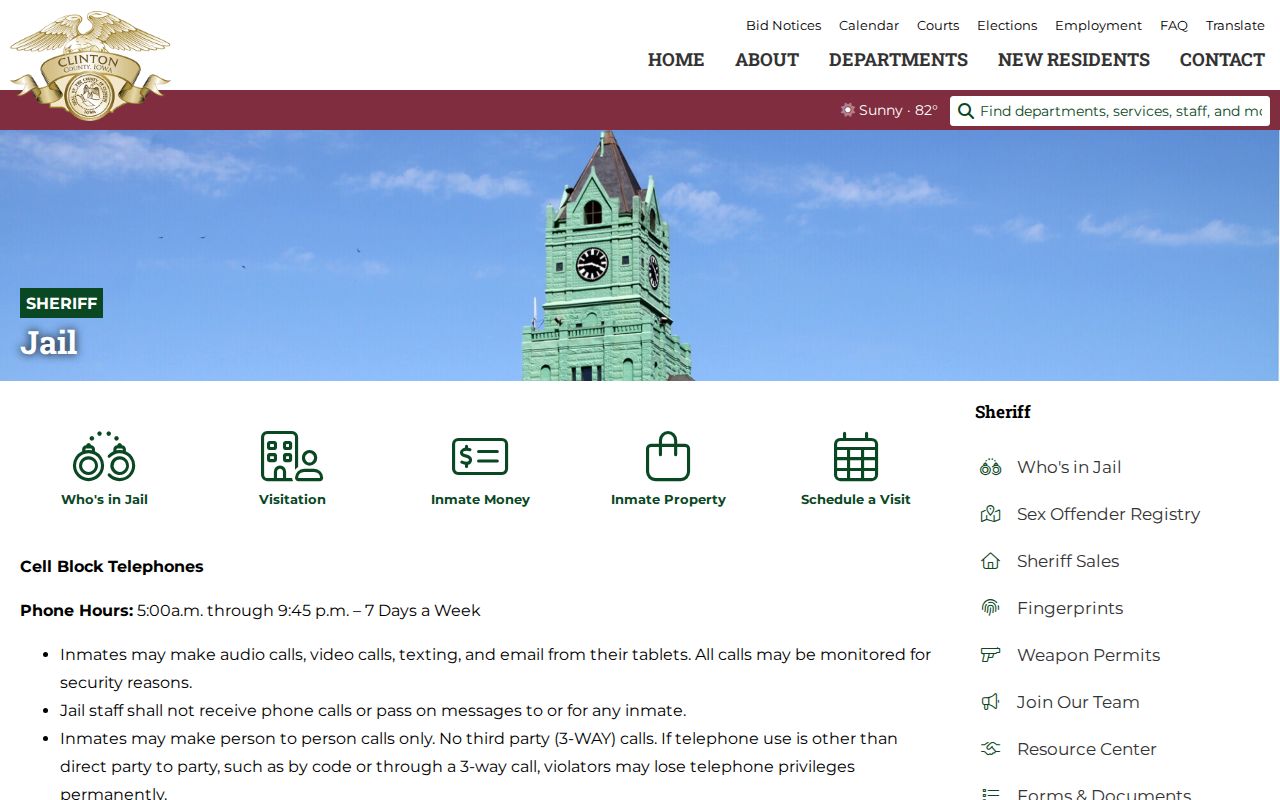
That page sets no public warrant surrender schedule and no standard bond amount. Ask the issuing court or serving agency for real terms. Never infer a bond amount from another case. After release, every hearing and condition still applies in Clinton County, and the charge stays pending until the court resolves it.
Clinton County Arrest Warrant Limits
Iowa's open-records law lets the public search permitted case data and request nonconfidential records. Those rights stop at unserved warrant confidentiality, sealed filings, investigative protections, and juvenile-record rules. Keep any request narrow. Send it to the lawful custodian, with the case or date range spelled out for Clinton County.
Access rule: A clear Iowa Courts Online result cannot rule out a confidential Clinton County arrest warrant. Confirm through the responsible agency or counsel.
Once a warrant is served, recalled, or quashed, get official proof. Recalled means the Clinton County court withdrew the order. Quashed means the court set it aside. "Cleared" is just a general term, so tie it to a docket event or agency confirmation before relying on it.